
By Aaron Askelson, Naturalist
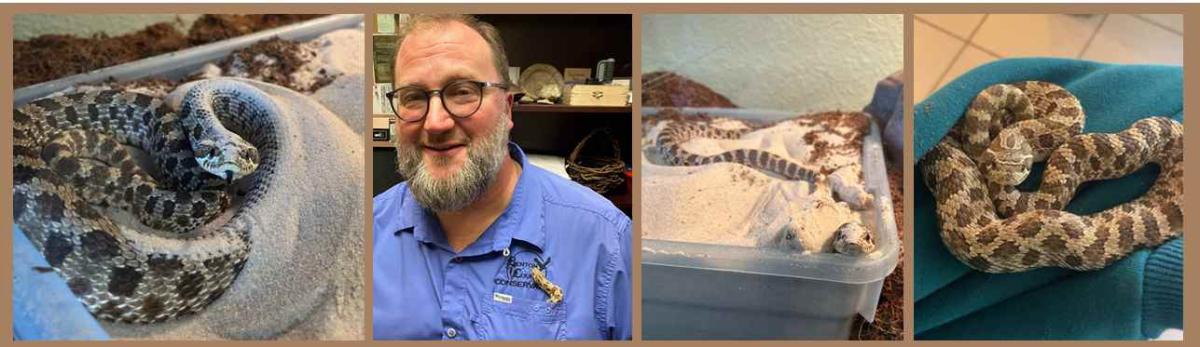
Our newest animal ambassador is a western hognose snake aka plains hognose snake. We received this male snake from a research project that is being conducted by West Liberty University in West Virginia. He is our second snake at the nature center. We already have a western fox snake who has been an ambassador with us for 13 years. Animal ambassadors help us teach the public about animals that live in Iowa. These ambassadors allow visitors to see firsthand what these animals look like, how they move around, and even how they feel. The hognose was bred in captivity and is very used to being handled by humans since he was a part of a research program.
This is essential for an animal ambassador. When the public can make a personal connection to a wild animal, they can understand the importance of preserving an animal's habitat.
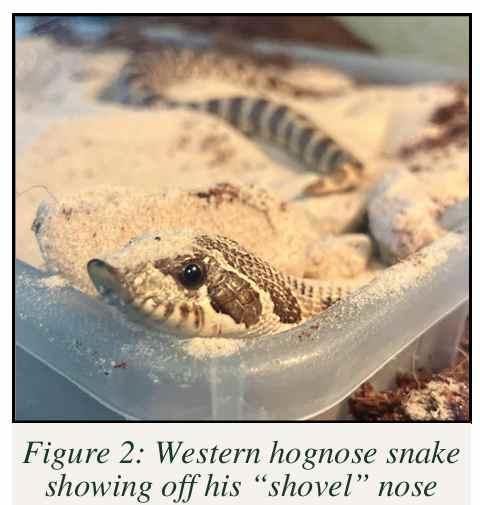
Western hognose snakes are best known for their upturned snouts that help them burrow or “dig” in the sand. They need loose gravely soils to burrow into to hide. Playing dead is one of their defensive strategies. When threatened, they sometimes perform a convincing “death display,” rolling onto their backs and playing dead to deter predators. They will go completely limp and stick their tongue out of their mouth and release a musk that smells of decaying flesh out of their cloaca. This comes in handy when confronted by a predator.
Another defensive tactic they have is to flatten their necks and hiss loudly to mimic more dangerous snakes. Their range in Iowa has been dwindling, and they are listed as a state endangered species, historically they would have had a larger range across Iowa's grasslands and arid environments. In Iowa, their endangered status and being a species of greatest conservation need makes learning about them and preserving their habitat that much more important. The snake is now referred to by its new common name the plains hog-nosed snake.
If you were to see one of these snakes in the wild it is important that you report it to your local conservation board or the Iowa DNR as populations of this snake are not that well documented. During the winter months they burrow down and brumate which is a cold-blooded animal’s version of hibernation. The plains hognose snake is diurnal, so they are active during the day and sleep at night. Their preferred meal is toads or frogs, but they also eat small rodents and large insects. They even have specialized fangs in the back of their mouth that face backwards so they can easily pop toads. Toads try to inflate themselves so they can not be eaten, but this doesn’t work with the hognose.
Hognose snakes can reach lengths of 15 to 33 inches, females are typically larger than males. Their camouflage patterns can vary quite a bit depending on what region they are from. We are excited to add this new snake to our collection of animals and look forward to educating the public about this amazing snake. He currently is not on display as he gets used to his new home, but he soon will be out in the animal room for all to see and enjoy.


Comments
Submit a CommentPlease refresh the page to leave Comment.
Still seeing this message? Press Ctrl + F5 to do a "Hard Refresh".