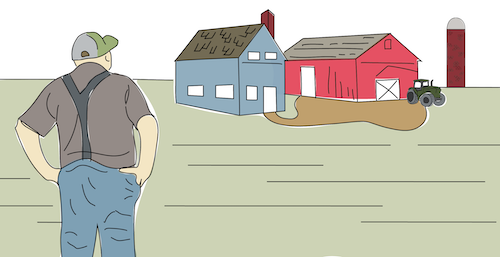
Today, two-thirds of Iowa farmland is owned by individuals aged 65 and older. Landowners aged 75 and older now own a record 37% of all acres.
According to Kristine Tidgren, director of the Center for Agricultural Law and Taxation and Dolezal adjunct associate professor of agricultural education at Iowa State University, these demographics make farm transition planning increasingly urgent. ¢â‚¬Å“I've learned that (retirement) is not always a goal for a lot of farmers, but nonetheless, for a lot of them, their health will cause them to have to slow down and not be able to do all the same things on the farm that they've been able to do in the past, ¢â‚¬ � she said.
¢â‚¬Å“Like it or not, things are going to have to transfer when we're looking at that demographic. ¢â‚¬ � For many families, the question is both practical and deeply personal: How can this farm continue?
The Barriers
Despite the inevitability of farm transition, estate and succession planning is often delayed. One reason is purely emotional. Planning for the future requires people to confront mortality and a transfer of control in an operation they have spent decades building. ¢â‚¬Å“I think we all realize it's something that's not very fun to do because it does make us think about things that are hard, like, ¢â‚¬ËœI won't be able to do this forever. I won't be in charge of my farm forever, ¢â‚¬â„¢ ¢â‚¬ � said Tidgren.
Family dynamics pose another significant barrier. Conversations about inheritance, ownership and management responsibilities can become uncomfortable.
Who gets what?
Who is entitled to what?
Who will stay and who won ¢â‚¬â„¢t? Will anyone?
¢â‚¬Å“Well, I ¢â‚¬â€�, ¢â‚¬ � ¢â‚¬Å“You never ¢â‚¬â€� ¢â‚¬ � ¢â‚¬ ¦
Fear of family conflict often stalls open, honest and equitable conversations.
¢â‚¬Å“People are afraid that fights will erupt. So they just keep it secret and let the kids deal with it, ¢â‚¬ � said Tidgren. ¢â‚¬Å“But that just means that after you're gone, your kids likely won't be connected very well because there might be disputes that didn't need to happen. ¢â‚¬ �
At its core, farm transition planning requires something many farmers find difficult: relinquishing control. ¢â‚¬Å“It ¢â‚¬â„¢s a very hard thing to do because it was in many ways that control that made the business successful, ¢â‚¬ � Tidgren noted. ¢â‚¬Å“Part of the responsibility that comes along with that is the responsibility to learn, to turn it over and to relinquish. ¢â‚¬ �
For farm families already managing demanding day-to-day operations, the process can feel overwhelming. But what if it moved from reeling to rewarding? Confusing to clear? From existential to exciting?
That ¢â‚¬â„¢s where education and preparation can make a difference. ¢â‚¬Å“We ¢â‚¬â„¢re here to help, ¢â‚¬ � said Tidgren.
The Solution
Tidgren and a team of 14 interdisciplinary specialists developed the Estate and Succession Planning for the Farm Portal, an interactive online resource designed to guide farm families through the planning process.
The portal includes hours of educational videos, case studies and practical resources covering the legal, financial and communication aspects of estate and succession planning. Users can explore the materials at their own pace and focus on the topics most relevant to their situation.
As an online resource, the team will continuously make updates to ensure it remains a reliable and evolving source of accurate information. It complements the Estate and Succession Planning for the Farm workbook, which has been used by many farm families planning for transition. The online platform expands on the workbook with an educational approach.
¢â‚¬Å“We've never had a program where we brought everybody together and said, ¢â‚¬Ëœlet's just come together to try to make a very complete educational program, ¢â‚¬â„¢ ¢â‚¬ � said Tidgren. ¢â‚¬Å“It ¢â‚¬â„¢s much more in-depth than anything we found out there in terms of resources to educate farmers. We ¢â‚¬â„¢re not selling anything. We are just objective extension professionals. You don ¢â‚¬â„¢t pay us by the hour to find those things out. ¢â‚¬ �
The portal features several types of resources:
- Estate and Succession Planning Video Chapters. Approachable lectures from ISU attorneys guide users topic by topic. The chapters supplement the Estate and Succession Planning for the Farm workbook.
- Frequently Asked Questions. In a conversational format, Tidgren and Kristiana Coutu, director of the Beginning Farmer Center at ISU, discuss the most common questions they receive about estate and succession planning for the farm.
- Case Studies. Extension farm business specialists review various case studies. Topics include communication breakdowns, tragedies, contingency planning, blended families, labor management, and insurance options.
- Communication Resources. Kiley Flemming, executive director of Iowa Mediation Service, guides learners through communication tools to address family communication conflicts and best practices.
- Tools and Resources and Helpful Links. The portal provides a list of additional resources for users to learn beyond the portal.
The Impact
Feedback suggests that the portal can help families save time and money as they prepare to work with tax professionals. According to Tidgren, 56% of users said it would save between five and 15 hours of attorney work, and 25% said it would have an economic impact of more than $25,000.
¢â‚¬Å“Those numbers are telling, ¢â‚¬ � she said.
The portal is not intended to replace professional legal or tax advice; rather, it prepares farm families for those conversations so they can work more efficiently and develop more thoughtful plans.
Previously available for a $75 lifetime subscription, the portal is now offered at no cost for users.
¢â‚¬Å“Because we have gotten so much support for this project, we are going to be able to offer it free of charge to our people, ¢â‚¬ � Tidgren shared. ¢â‚¬Å“We want to close that gap. We want people to have written succession plans. We want to be that partner in their planning process. ¢â‚¬ �
ISU Extension and Outreach is here with you
For Tidgren, estate and succession planning impacts more than the farm; it maintains the vitality of rural communities across Iowa. ¢â‚¬Å“To keep the rural communities vibrant, we need to have the farm communities strong. The only way to do that is to have good planning in place that allows them to carry on and continue. ¢â‚¬ �
Iowa State University Extension and Outreach is here as a trusted partner in the process. To begin your Estate and Succession Planning journey, visit the Center for Agricultural Law and Taxation website.
For more information, contact Tidgren at ktidgren@iastate.edu.
Iowa Concern offers confidential, no-cost support to help Iowans navigate stress, legal issues, financial challenges and crisis situations. Iowans can talk to someone or find the right resources anytime.
---
Artwork by Alex Bartholomew, ANR Communications graphic designer
Comments
Submit a CommentPlease refresh the page to leave Comment.
Still seeing this message? Press Ctrl + F5 to do a "Hard Refresh".